

Hidden storage can make a bedroom feel calmer, but only when it hides visual clutter rather than hiding your belongings from you. The goal is not to fill every empty gap. It is to give specific categories a predictable home, so getting dressed, changing the bed, or finding an accessory does not begin with a search.
Start by separating everyday items from occasional, seasonal, and sentimental ones. Put the things you reach for often nearest to where you use them, and reserve less convenient spaces for belongings that genuinely need less frequent access. A few visibility cues, consistent categories, and room to pull storage out are what keep an out-of-sight system useful.
Quick answer
Create hidden bedroom storage by separating everyday items from occasional and seasonal ones, then give each group a specific drawer, closet, door, or under-bed zone. Keep frequently used things closest to hand, use visibility cues such as compartments or clear windows, and leave enough room to access each storage area without unpacking the whole system.
Start by defining what truly needs to be stored out of sight
Think of hidden storage as a way to reduce visual noise, not as a final destination for anything without a home. Empty one problem area at a time, such as a dresser drawer, closet shelf, or the space under the bed. Make four loose groups: daily-use items, occasional-use items, seasonal belongings, and sentimental pieces. This immediately shows which things need easy access and which can live farther away.
Edit before choosing containers. Remove damaged items, duplicates you do not use, and objects that belong in another room. Be especially careful with vague “deal with later” piles; they are the quickest route to mystery clutter. If an item is worth keeping, name its category and its future location in plain terms, such as “guest bedding under the bed” or “daily socks in the top drawer.”
Match each category to the least disruptive bedroom zone
Use convenience as your placement rule. Daily essentials work well in dresser drawers or at eye level in the closet, where they can be picked up and returned without rearranging anything. Items used occasionally can go on a closet shelf or behind a closet door. Low, wide under-bed space suits bulky seasonal belongings, spare bedding, and other categories you do not need during the morning routine.
Measure before committing to a storage format. Check the usable interior of drawers rather than their outside dimensions, the depth of shelves, available door clearance, and the gap beneath the bed. Also allow space to open a drawer, swing a door, or slide out a bin. A storage area is only helpful if you can reach its contents without moving several other things first.

Hidden Homeware find
Set of 4 Foldable Grey Under Bed Storage Bins with Clear Window & Handles for Bedroom Organization
Storage Organizer
View productUse under-bed storage for bulky, low-frequency belongings
Under-bed space is most useful when it holds complete, low-frequency categories: off-season clothes, spare bedding, extra blankets, or shoes not in current rotation. Keep unrelated items separate rather than creating one mixed bin. Put the least-used category toward the back, place the more likely-to-be-needed category closer to the edge, and keep a short contents note where you will see it when you pull the storage out.
The Set of 4 Foldable Grey Under Bed Storage Bins with Clear Window & Handles for Bedroom Organization suits a bedroom that needs several distinct under-bed zones. Its soft-sided, slim bins have front clear windows for a quick contents check and handles on three sides for pulling or carrying. About 6 inches of bed clearance is recommended. Use separate bins for categories such as sweaters, spare sheets, blankets, and shoes rather than treating all four as general overflow; they fold flat when empty.
Choose one larger under-bed zone when linens or seasonal clothing need to stay together
Several smaller containers are not always the clearest choice. When one category naturally belongs together, such as guest linens, quilts, or a full seasonal clothing rotation, one larger zone can make the return process simpler. Keep the category narrow enough that you can describe it in a few words. If the contents require a long explanation, divide them instead.
The 2-Pack Large Under-Bed Storage Bins with Clear Window Lids for Bedding & Seasonal Clothes (125L) offers two roomy under-bed zones for bulky bedding, sweaters, seasonal clothes, or guest linens. Each bin has a clear window lid and side handles, which can make checking and pulling out a broad category easier. The trade-off is that a large bin can become heavy or overfilled, so do not pack it so tightly that the lid will not close or the bin is difficult to slide out. Confirm your bed clearance using the product images before choosing it.

Hidden Homeware find
2-Pack Large Under-Bed Storage Bins with Clear Window Lids for Bedding & Seasonal Clothes (125L)
Under-Bed Storage Bin
View productTurn dresser drawers into concealed storage that stays usable
A drawer is hidden storage at its most convenient when it follows the order you get ready. For example, keep underwear and socks together in one drawer, sleepwear in another, and accessories in their own section. Fold or roll small garments consistently so you can see the group at once. Leave a little open space rather than compressing every item; a drawer that closes only when forced will quickly become a pile again.
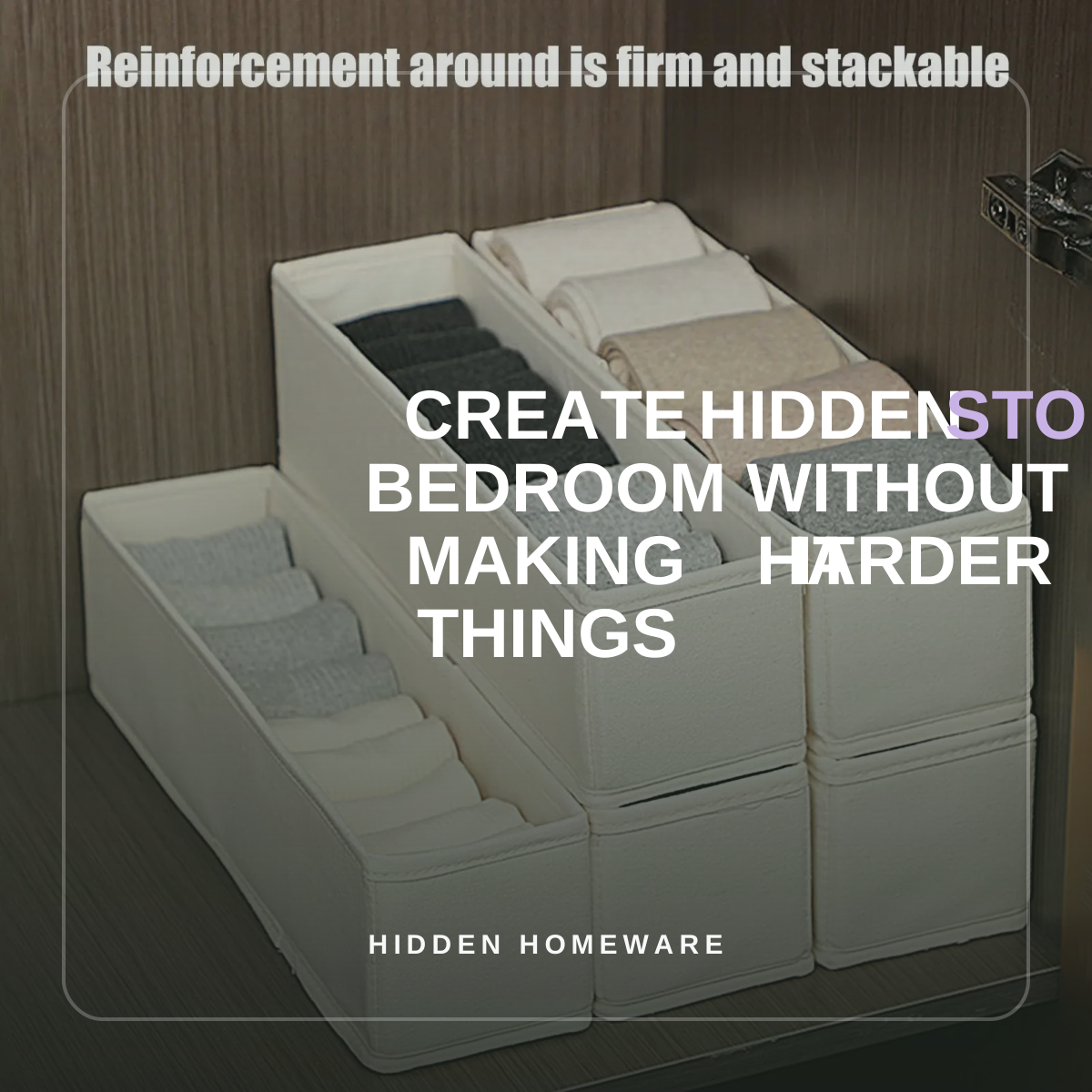
The Slim Foldable Fabric Drawer Organizer Bin for Socks, Underwear & Accessory Storage in Bedroom or Closet – Beige, 40x10x10cm provides a narrow division inside a drawer or on a closet shelf. Its lightweight, foldable fabric construction and reinforced sides make it a practical option for separating one small category, such as socks, underwear, or accessories. Measure the drawer interior first, and use it only where its slim shape creates a clear boundary; a few well-defined sections are generally easier to maintain than many tiny ones.

Hidden Homeware find
Slim Foldable Fabric Drawer Organizer Bin for Socks, Underwear & Accessory Storage in Bedroom or Closet – Beige, 40x10x10cm
Drawer Organizer
View productGive small valuables a protected drawer home
Jewelry and small keepsakes are easy to lose when they are dropped into a general catch-all drawer. First, edit the category: separate daily pieces from occasion pieces, remove anything needing repair from the active collection, and decide on one home for the items you keep. Make returning pieces part of taking them off, rather than leaving them on a bedside surface where they can spread into other clutter.
The Soft Grey Velvet Jewelry Drawer Organizer Tray – Multiple Compartment Styles for Bedroom or Closet creates defined, softly lined spaces for rings, earrings, bracelets, and other small accessories. It lies flat in most bedroom or closet drawers, so items can be separated and visible when the drawer opens. Different grid and compartment styles are available, so choose a layout that reflects what you actually wear. A tray is most useful for the pieces in rotation; keep occasion jewelry in a separate, clearly assigned area if it would crowd the daily selection.

Hidden Homeware find
Soft Grey Velvet Jewelry Drawer Organizer Tray – Multiple Compartment Styles for Bedroom or Closet
Jewelry Organizers & Stands
View productUse the inside of a closet or bedroom door for items that do not need a drawer
The inside of a closet or bedroom door can hold categories that are awkward in drawers, including shoes, scarves, hats, small bags, or folded accessories. It clears floor and drawer space while keeping often-used belongings visible when the door opens. Limit this zone to categories you use regularly enough to justify the access. Before filling it, check that the door closes freely and that the items will not interfere with nearby shelves or furniture.
The 10-Tier Over-the-Door Shoe Organizer for Closet, Entryway, or Bedroom – Black or Grey can store shoes or selected daily accessories on an interior door. It is designed to fit most interior doors and uses included steel hooks; the supplied guidance lists compatible door thicknesses of 1.37 to 1.97 inches. Its tiers can also hold items such as hats, small bags, or folded clothing, but avoid turning every shelf into mixed overflow. Put the pairs or accessories used most often in the easiest-to-reach positions and review the organizer regularly.

Hidden Homeware find
10-Tier Over-the-Door Shoe Organizer for Closet, Entryway, or Bedroom – Black or Grey
Over Door Shoe Organizer
View productKeep hidden storage findable with a five-minute reset routine
A short reset prevents hidden storage from becoming forgotten storage. Once or twice a week, return misplaced items to their assigned zone and place anything you no longer want in a small donation bag. Rotate seasonal bins deliberately rather than adding new items on top of old ones. When a category changes, update the contents note or label at the same time, so the next seasonal switch does not require rediscovering what you stored.
Use a simple access test whenever the bedroom begins to feel crowded again. Can the under-bed area pull out easily? Do drawers close without force? Are the categories obvious at a glance? Is any everyday item trapped behind something rarely used? If the answer is no, reduce the contents, move the daily-use category closer, or split an overloaded zone. The system is working when putting something away takes less thought than leaving it out.
Frequently asked questions
What should I store under the bed instead of in my closet?
Use under-bed space for bulky, low-frequency categories that do not need to be reached during your daily routine. Off-season clothing, spare bedding, extra blankets, guest linens, and shoes outside your current rotation are sensible choices. Keep each container focused on one category, and leave daily clothing and frequently worn shoes in drawers, shelves, or door storage where they are easier to reach.
How much clearance do I need for under-bed storage bins?
Measure the open gap from the floor to the lowest point of the bed frame, then compare it with the storage bin dimensions and allow room to slide it. The set of four foldable grey under-bed bins recommends about 6 inches of clearance. For the larger bins, refer to the product images for the required clearance. Do not assume a bed has space simply because it looks raised.
How do I keep under-bed storage from becoming cluttered?
Give every bin a single category, avoid mixing unrelated items, and make the contents easy to identify with a clear window, note, or label. Store the least-used bins farther back and avoid overfilling them. At seasonal changeover, take out the old category before adding the new one. If you have to dig through a bin to find something, its category is too broad or it contains too much.
Should socks and underwear be stored in drawer organizers?
Drawer organizers can be useful if they make the categories easier to see and return. They work particularly well for small garments that otherwise shift into a mixed pile. Choose only as many sections as you can maintain, measure the drawer interior first, and leave a little room so the drawer closes easily. Folding or rolling items consistently matters as much as the organizer itself.
What is the best way to store jewelry out of sight without tangling it?
Keep jewelry in a dedicated drawer area with separated compartments rather than a general catch-all drawer. Group daily pieces apart from occasion pieces, and return each item after wearing it. A flat tray with divided, softly lined compartments, such as the Soft Grey Velvet Jewelry Drawer Organizer Tray, keeps small pieces visible and separated inside a drawer. Choose compartment shapes that suit the jewelry you own rather than forcing everything into one section.
Hidden bedroom storage should make the room easier to live in, not add another place to search. Begin with fewer, clearer categories, then match them to the access level they deserve: daily items close by, occasional items on shelves or doors, and bulky seasonal belongings under the bed.
You do not need to organize every zone at once. Start with the area that causes the most daily friction, test whether it is easy to put things back, and adjust before expanding the system. A hidden space stays helpful when every item has a known route in and out.
Related reading
Keep organizing
Explore Closet Storage
Browse more practical pieces for making everyday spaces easier to use.
Shop the collection