

An overfull closet is rarely solved by simply squeezing in more. The real difficulty is that everyday clothes, shoes, spare bedding, occasionwear, and accessories are all competing for the same easy-to-reach rail, shelves, and floor. When everything is equally close at hand, the items you use most become difficult to find and put away.
Start by giving each category a home based on how often you use it. Keep current everyday clothing in the prime-access area, create clear limits for shoes and folded stacks, and move genuinely out-of-rotation items to shelves or under-bed storage. The aim is not to fit every possession onto one rail; it is to make getting dressed and resetting the room simpler.
Quick answer
Start by separating everyday clothing from seasonal, occasional, bulky, shoe, and accessory categories. Keep the items you wear most in the easiest-to-reach parts of the closet, use dividers and vertical hanging to prevent crowding, and move clearly defined off-season or bulky items into labelled shelf or under-bed storage.
Why closets overflow even when they seem large enough
A closet can look generous when it is empty but still struggle in daily use. Hanging clothes consume the rail, folded items drift into unstable stacks, and shoes take over the floor because there is no defined place for them. Seasonal coats, spare blankets, and special-occasion outfits often stay mixed with current clothing, further reducing the room available for what you actually need this week.
Treat this as an access problem before treating it as a storage problem. The closest, most visible space should serve the clothing that supports your present routine. Less-used categories can still stay nearby, but they do not need to occupy the same prime shelf or rail position. Once each group has a zone, it is easier to see whether you need a different container or simply a clearer boundary.
Take stock first: sort clothing by frequency, bulk, and storage needs
Empty one area at a time rather than creating a bedroom-wide pile. Sort into everyday hanging clothes, everyday folded clothes, shoes, accessories, special-occasion pieces, and off-season or bulky textiles. Put garments that are in regular rotation in one group even if their colours or styles differ. This gives you a realistic picture of what needs the easiest access instead of organizing around an ideal version of your wardrobe.
Before assigning homes, measure the usable depth of shelves, the free length of hanging rail, and the clearance beneath the bed. Also note awkward features such as a low rail, a shallow shelf, or a bed frame with limited space underneath. Decide what each location can comfortably hold, then assign one category at a time. If a group has no sensible home, reduce that group, relocate it, or reserve it for secondary storage rather than forcing it into an already crowded zone.

Hidden Homeware find
Clear Shelf Dividers for Closet and Cabinet Organization—Set of 2, 4, 6, or 8 for Tidy Bedroom, Linen, and Wardrobe Shelves
Closet Shelf Divider
View productProtect the shelves that hold everyday folded clothes
Use closet shelves for categories that fold well and are reached often, such as T-shirts, knitwear, jeans, or workout clothes. Give each shelf a single main category and keep stacks deliberately modest so the bottom items can be removed without toppling everything else. Leave a narrow gap between categories where possible. That small amount of breathing room makes it easier to return laundry and notice when a pile has become too tall.
Clear Shelf Dividers for Closet and Cabinet Organization create physical boundaries between folded clothes, bags, or linens on suitable flat shelves about 30 cm deep. Their clear finish keeps the shelf visually open, and the dividers can be slid into a new position as your categories change. They are useful when adjacent stacks regularly lean together, but they will not solve overfilled shelves on their own; reduce a stack or move a less-used category before adding boundaries.

Hidden Homeware find
Black 5-Tier Hanging Closet Organizers, Space-Saving Detachable Hangers for Bedrooms & Small Wardrobes, 5-Pack
Hanging Closet Organizer
View productUse hanging space for the clothes that need it most
Reserve hanging space for wrinkle-prone daily clothing, frequently worn layers, and pieces you choose more easily when you can see them. Group garments by use: work clothes, everyday tops, outer layers, or occasionwear. This is usually more practical than a strict colour arrangement, because it puts the items needed for the same part of your day together. Keep your most-used group at the front or centre of the rail and place occasional pieces toward an end.
Black 5-Tier Hanging Closet Organizers, Space-Saving Detachable Hangers for Bedrooms & Small Wardrobes, 5-Pack can hold shirts, sweaters, or light coats vertically rather than side by side. This can suit a crowded rail where these lighter garments are taking up more width than you have available. Use them selectively for a clear category, not for every item in the closet. Heavier pieces or garments that need more room may be better kept on individual hangers.
Give shoes a defined limit instead of letting them spread through the closet
First, separate shoes by current use. Keep the pairs you wear this season closest to the closet entrance or another convenient spot, and group occasion shoes separately. Decide how many pairs can realistically occupy your shoe zone; a limit stops the closet floor becoming overflow storage. Avoid loose piles, which make it harder to see pairs, clean around them, and return them after wearing.
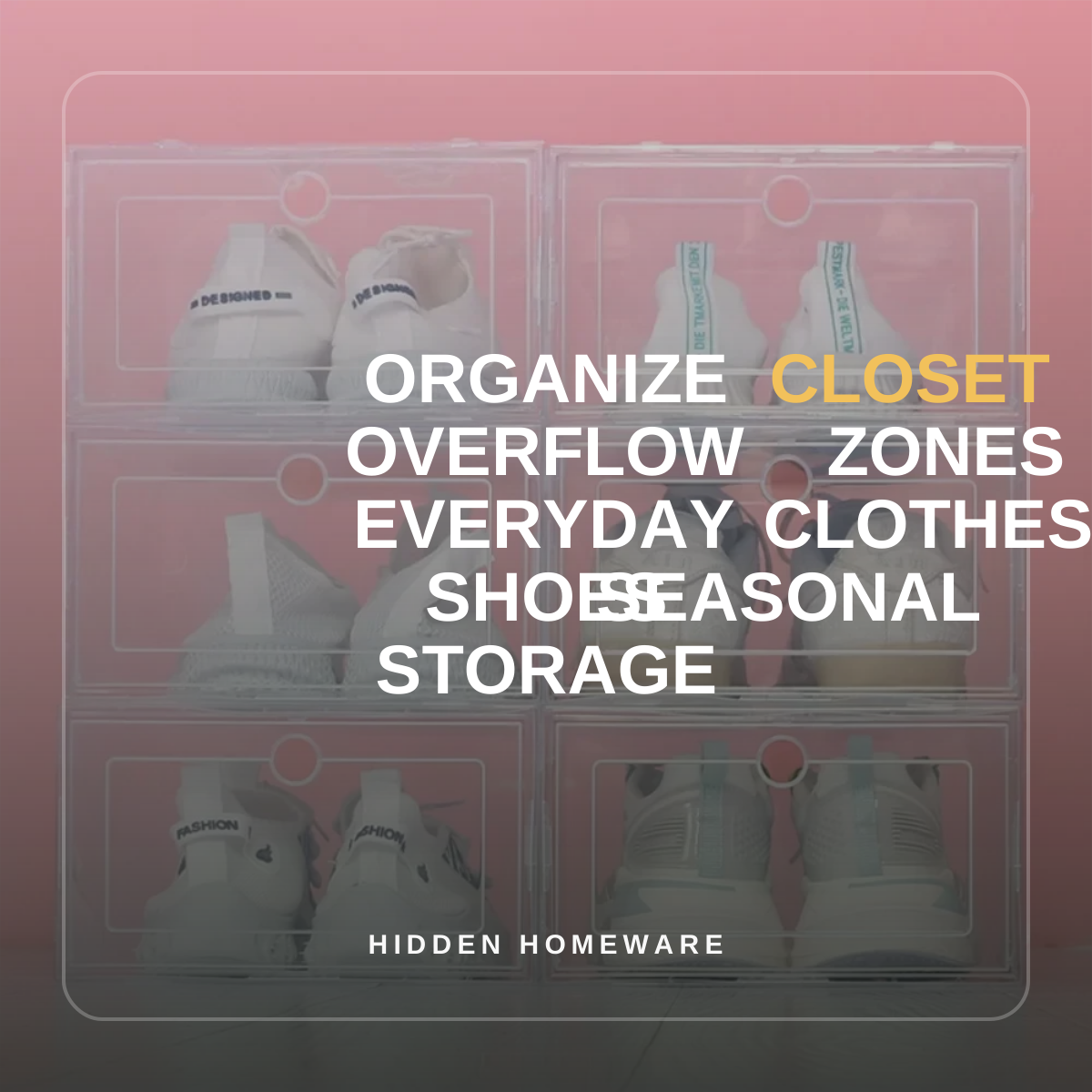
Stackable Clear Shoe Storage Boxes – Set of 6 Large Modular Bins for Closet, Entryway, or Under-Bed Organization give individual pairs visible, front-opening homes. Arrange them as a vertical stack in a closet if floor height is available, or line them up under a bed if that layout is easier to access. The clear design helps identify a pair without opening every box. They are a helpful choice for shoes you want contained and easy to find, while daily footwear can remain in the most convenient zone.

Hidden Homeware find
Stackable Clear Shoe Storage Boxes – Set of 6 Large Modular Bins for Closet, Entryway, or Under-Bed Organization
Shoe Box
View productMove seasonal and bulky items out of the daily getting-dressed zone
Secondary storage is well suited to spare bedding, heavy sweaters, off-season clothing, and less-used shoes or accessories. These items do not need to disappear permanently; they need a home that does not interrupt the daily routine. Store each category together, identify it clearly, and choose a planned seasonal swap date. When weather or routines change, bring one category back into prime space and move the previous season out.
A Rolling Underbed Storage Drawer with Clear Dustproof Lid for Clothes, Linens, or Shoes can keep folded clothing, linens, shoes, or accessories beneath the bed while keeping them accessible. Its wheels are useful if you expect to retrieve the drawer rather than leave it untouched for months, and the clear lid makes the contents easier to identify. Check your under-bed clearance before choosing this approach. Use the drawer for neatly defined groups, rather than filling it with a mixed collection of leftovers.

Hidden Homeware find
Rolling Underbed Storage Drawer with Clear Dustproof Lid for Clothes, Linens, or Shoes – Black or Gray
Underbed Storage Drawer
View productChoose shelf storage for items that should stay contained and out of sight
Closet shelves, wardrobes, and bedroom storage work well for soft goods that do not need daily visibility. Give each container one clear category, such as underwear, spare pillowcases, off-season tops, or guest bedding. Add a simple label to the front or lid, especially if several containers look alike. This prevents the familiar cycle of lifting every box to find one item, then returning things to whichever container is open.
The Beige Foldable Lidded Clothes Storage Box – Non-Woven Closet Organizer Bin for Wardrobe, Underwear, and Blankets is suited to off-season clothes, underwear, blankets, or extra bedding that you want kept together and out of sight. Its lid helps protect stored fabrics from dust, while its foldable construction is useful when a box is not needed. Choose shelf storage when you can lift the lid comfortably and see the label; for frequently used items, an open and more immediate zone may be less frustrating.

Hidden Homeware find
Beige Foldable Lidded Clothes Storage Box – Non-Woven Closet Organizer Bin for Wardrobe, Underwear, and Blankets
Lidded Storage Box
View productCompress only the soft items you truly will not need soon
Compression is most useful for soft, bulky textiles that are genuinely out of rotation, such as spare duvets, winter bedding, or a seasonal clothing group. It is less helpful for anything you need every week, because unpacking and repacking adds a step to a routine that should be simple. Before closing a bag, make a brief contents note and choose a return date, such as the start of the colder or warmer season.
Space-Saving Vacuum Storage Bags with Pump for Closet, Under-Bed & Travel Organization can reduce the volume of soft bedding and clothing for closet or under-bed storage. Their clear sides help you see what is stored, but a label remains useful when several bags are stacked together. Keep a compressed category together rather than combining unrelated items merely to fill a bag. Do not use compression as a reason to keep every excess item in the bedroom; it works best after you have made clear decisions about what is worth storing.

Hidden Homeware find
Space-Saving Vacuum Storage Bags with Pump for Closet, Under-Bed & Travel Organization
Vacuum Storage Bags
View productKeep closet overflow from returning: a 10-minute weekly reset
Set aside ten minutes once a week to return clean clothes to their correct zone, re-fold one disrupted shelf stack, and place shoes back in their assigned spot. Do not attempt a complete reorganization during this reset. The purpose is to correct small drift before it turns into a crowded rail, a collapsed shelf, or a floor pile. If something repeatedly has no home, adjust its category or location rather than leaving it out.
Keep a small donation or repair bag outside the main closet so undecided items do not claim prime space. At each seasonal change, review the under-bed and shelf-storage zones, swap the clothing you will now use, and reassess what has not earned easy access. This light routine protects the system: everyday items remain close, occasional items remain contained, and the closet stays workable without needing constant large clear-outs.
Frequently asked questions
What should I store under the bed instead of in my closet?
Use under-bed space for clearly defined categories that are useful but not part of your daily getting-dressed routine: off-season clothes, spare bedding, heavy sweaters, less-used shoes, or accessories. Avoid putting a random mixture underneath the bed, as it becomes difficult to retrieve. Check the available clearance first, and choose storage you can pull out without needing to move other furniture.
How do I decide which clothes deserve hanging space?
Give rail space to clothes that wrinkle easily, are worn frequently, or are easier to choose when visible. Daily layers and work clothing often belong there. Fold sturdy items that stack well, such as many T-shirts, knitwear, and casual trousers, if shelf space is available. Special-occasion pieces can hang farther from the prime-access area when they are not in current rotation.
How can I stop folded clothes from falling over on closet shelves?
Assign each shelf a main category, keep each stack low enough to remove items from the bottom, and leave some space between groups. Avoid combining clothes, bags, and linens in one unstable pile. Shelf dividers can create a physical edge between stacks on appropriate flat shelves, but the key is reducing the amount on the shelf until each category can stand independently.
Should shoes be kept in boxes in a bedroom closet?
Boxes are useful when shoes tend to pile up, get separated from their pair, or become hard to see at the back of the closet. Clear, front-opening boxes can make pairs easier to identify and access. They are not essential for every shoe: keep the footwear you reach for constantly in the most convenient assigned location, and use boxes to contain the rest.
What is the best way to store off-season bedding and winter clothes?
Store each seasonal category together, label it, and choose a planned date to bring it back into rotation. Shelved lidded boxes suit items you want contained and out of sight, while under-bed storage can keep bulky folded textiles nearby. Vacuum bags are most useful for soft items you will not need soon. Whichever method you choose, avoid mixing seasonal storage with everyday clothes.
A workable closet does not require every category to be visible at once. It requires a clear hierarchy: everyday clothing gets the easiest access, shoes get a defined limit, and seasonal or bulky items move to a labelled secondary zone.
Start with one shelf, one rail section, or the closet floor rather than attempting the whole room in a day. Once each group has a home that matches how often you use it, keeping closet overflow under control becomes a short reset instead of a recurring overhaul.
Related reading
Keep organizing
Explore Closet Storage
Browse more practical pieces for making everyday spaces easier to use.
Shop the collection