

An untidy shed or garage usually is not caused by having too much equipment alone. It happens when rakes, hoses, gloves, cords, and small supplies return from different jobs without a reliable place to land. The result is a blocked doorway, a floor that is difficult to sweep, and time wasted looking for the item you were sure you had.
Safety note: For unwanted or part-used cleaning products, follow the product label and applicable local waste or household hazardous-waste guidance rather than treating them as ordinary clutter.
The simplest fix is not one enormous cabinet or a marathon sorting session that is impossible to maintain. Build a small system around how you garden and maintain the outside space: clear a route first, group items by task, use open wall space for awkward gear, and keep everyday supplies ready to carry. Each item does not need elaborate storage; it needs an obvious home that is easy to use again.
Quick answer
Start by sorting outdoor items into long-handled tools, hoses and cords, grab-and-go supplies, and occasional-use gear. Give each group a clear home—especially on open wall space—then keep only the tools you use together in the same zone so setup and cleanup are quicker.
Begin with the floor: identify what is blocking the space
Start by taking a close look at the floor, especially the entrance, the path to a workbench or mower, and the corners where tools tend to collect. Pull out items that are leaning, tangled, or sitting in the walkway. Set them in broad temporary groups rather than trying to organize as you go: garden tools, watering items, cords or powered equipment, small supplies, and items that belong somewhere else. A clear route through the space is the first practical goal.
Discard broken items you will not repair, empty containers you no longer use, and worn-out supplies. Move household items, car items, or seasonal decorations to their more appropriate storage areas if they are taking over the shed. Keep larger equipment on the floor only where it can be parked without narrowing the path. Once you can enter, turn, and retrieve a larger item without shifting a pile, you have a useful starting point—not a picture-perfect room, but one that can work.
Create four simple storage zones before choosing where anything hangs
Divide what remains into four zones: long-handled garden tools; watering equipment; cords and powered equipment; and portable gardening supplies. Put the group you use most often closest to the entrance or nearest the point where that job begins. For example, watering equipment is easier to return when it is near the tap, while pruning tools and gloves can sit near the door you use to reach planting beds. These placements reduce the temptation to drop things wherever you finish.
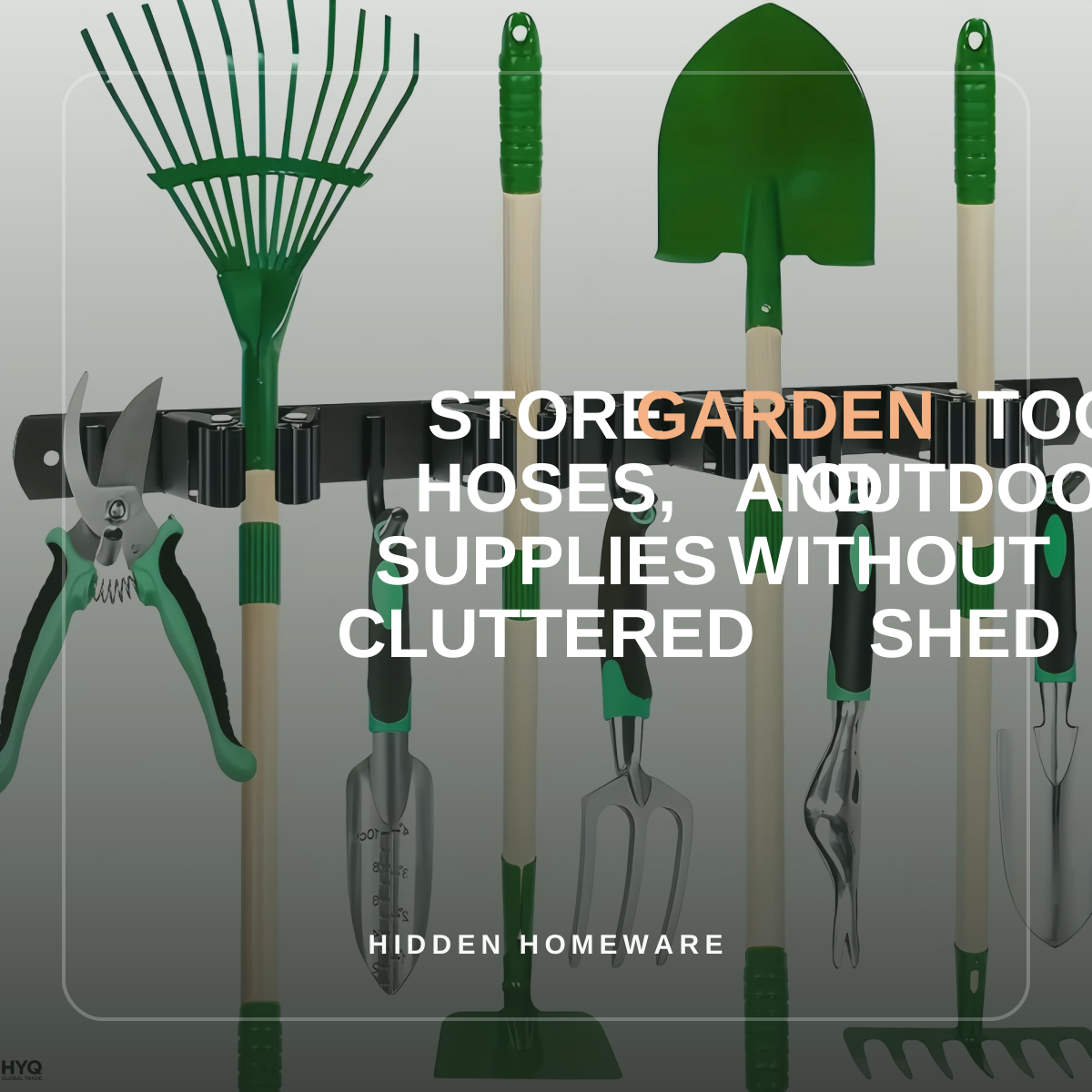
Next, look for open wall space that can take some of the items currently filling the floor. A Wall-Mounted Metal Tool Rack with 4 Slots & 5 Hooks for Garage, Shed, or Utility Room Organization – Black can form part of the long-handled-tool zone while also providing hooks for smaller accessories. It will not replace a separate hose home or solve every bulky item, but it can help establish the useful principle that each zone has a visible boundary and a return point.

Hidden Homeware find
Wall-Mounted Metal Tool Rack with 4 Slots & 5 Hooks for Garage, Shed, or Utility Room Organization – Black
Wall Tool Rack
View productGive rakes, shovels, brooms, and hand tools one visible home
A leaning pile of rakes, shovels, brooms, and cultivators is hard to use because removing one tool often shifts several others. Choose a reachable stretch of wall for the tools used most often. Arrange them by frequency: keep everyday tools at the easiest height and occasional tools farther along the wall or in a less central spot. Leave room between tools where possible, so one can be taken down and returned without disturbing the rest.
The Wall-Mounted Metal Tool Rack with 4 Slots & 5 Hooks for Garage, Shed, or Utility Room Organization – Black provides four slots for handled items and five hooks for smaller tools or accessories. Use the slots for the handled tools that fit your routine, then reserve the hooks for items such as hand tools or gardening gloves rather than letting them drift onto a shelf. If you own more handled tools than the rack can hold, prioritize the most-used ones and give the remaining tools another clearly defined wall location instead of rebuilding a floor pile.
Store the hose where watering actually happens
Treat the hose as its own category. Unlike a rake, it needs to be gathered after use, and it quickly becomes a trip hazard when left across a path. Pick a wall, fence, shed side, or garage location close to the water source and convenient to the area you water. Avoid placing it where a coiled hose will interfere with a doorway, gate, vehicle route, or the main walkway. The easier the return location is to reach at the end of watering, the more likely it is to be used.
A Wall-Mounted Garden Hose Holder for Outdoor Storage – Black or Orange for Sheds, Garages, or Yards gives the hose a dedicated off-the-ground home between uses. Choose black for a more understated appearance or orange if high visibility suits a busy outdoor area. Before mounting, consider the wall or fence material and ensure the location supports the routine you want: unwind at the tap, water, gather the hose, and place it back in the same spot. A holder is most helpful for the hose in regular use; spare lengths may be better kept separately and bundled.

Hidden Homeware find
Wall-Mounted Garden Hose Holder for Outdoor Storage – Black or Orange for Sheds, Garages, or Yards
Garden Hose Holder
View productUse flexible hooks for awkward gear that does not fit a rack
Some outdoor items are too bulky, flexible, or oddly shaped for a narrow tool rack. Ladders, larger tools, sports equipment, cords, and extra hose lengths can become an awkward pile when they have no assigned position. Give each of these items one hook location rather than hanging several unrelated things together. Think about the item’s shape and how you lift it down: frequently used gear should be easy to reach, while occasional gear can use higher or less central wall space.
Wall-Mounted Metal Utility Hooks for Garage, Shed, or Workshop Organization – Assorted Shapes for Tools, Cords, and Equipment offer varied hook shapes for equipment such as tools, cords, hoses, and ladders. Use the shape that suits the particular item instead of forcing every object into one arrangement. Check the wall material, choose a suitable mounting location, and avoid making a hook into a catch-all. If taking one item down pulls down another, separate them or rethink the placement before the clutter returns.

Hidden Homeware find
Wall-Mounted Metal Utility Hooks for Garage, Shed, or Workshop Organization – Assorted Shapes for Tools, Cords, and Equipment
Utility Wall Hooks
View productKeep cords and spare hoses bundled before they go on the wall
Hanging a loose extension cord or spare hose does not solve much if it is still tangled. Before returning flexible items, make a loose, manageable coil, straighten obvious twists, and secure the coil so it stays together. Keep the end accessible enough to identify what it is without unwrapping the whole bundle. This small step prevents the area beneath a hook from becoming a drop zone of loops, knots, and cables that are hard to use next time.
Rotating Buckle Cord Organizer Straps for Wall-Hanging Extension Cords, Hoses & Tools in Garage or Shed are designed to gather and secure extension cords, garden hoses, shop-vac hoses, or tool cables. Their rotating buckle can hang from a wall hook, nail, or rack, so they can work within the zones you have already created. Select a strap size suited to the thickness of the bundled item, and use one strap per coil when possible. The aim is clear visibility and easy retrieval, not squeezing several unrelated cords into one bundle.

Hidden Homeware find
Rotating Buckle Cord Organizer Straps for Wall-Hanging Extension Cords, Hoses & Tools in Garage or Shed
Cord Organizer Strap
View productMake a grab-and-go kit for small supplies
Small supplies are often the reason a newly organized shed becomes messy again. Gloves, twine, hand tools, labels, spray bottles, and plant ties tend to travel into the yard and return individually. Create one basic kit for the type of job you do most often, such as routine garden care. Pack only the items that are regularly used together, then return leftovers after the task. This is more manageable than keeping several half-full tubs scattered between shelves, patio, and shed.
The Large Folding Storage Organizer Bag with Handle – Portable Black Tool and Cleaning Basket for Home, Garden, Car & Outdoor Use is one portable option for gathering those everyday supplies. Its carry handle and multiple pockets help keep smaller items together, and it folds down when it is not needed. Use it as a working kit rather than permanent storage for every garden item: put hand tools, gloves, or bottles in it for the job, then return refill supplies and less-used items to their designated zones afterward.

Hidden Homeware find
Large Folding Storage Organizer Bag with Handle – Portable Black Tool and Cleaning Basket for Home, Garden, Car & Outdoor Use
Storage Basket
View productSet rules that keep the outdoor storage system working
A storage system lasts when its rules are short enough to follow after a tiring job. Return a tool before bringing out another if you are changing tasks. Coil and secure cords or hoses before hanging them. Keep the main route clear, even if another zone becomes temporarily busy. Before buying a replacement, look through the relevant zone so you do not add a duplicate simply because the original was buried. These habits make the system useful without requiring a complete reset every week.
At the start or end of a gardening season, take ten minutes to check whether each zone still matches how you use the space. Ask: Is anything repeatedly left on the floor? Is a frequently used item too far from the entrance? Does a hook hold too many things? Are small supplies escaping their kit? Adjust the location or limit of that zone before adding more storage. The most effective setup is one that makes putting items away feel like the final step of the task, not a separate chore.
Frequently asked questions
What is the best way to store long-handled garden tools in a small shed?
Use a reachable wall section for the long-handled tools you use most, rather than standing them together in a corner. Keep enough separation to remove one tool at a time, place occasional-use items farther from the door, and preserve a clear floor path for larger equipment.
How should I store a garden hose so it does not become tangled?
Choose a return point near the water source, gather the hose into a manageable coil after use, and keep it off the main route. A dedicated wall holder can make the return step more obvious, while spare hoses can be bundled separately until needed.
What outdoor items are worth hanging on the wall instead of keeping on the floor?
Hang items that create leaning piles or block movement, including long-handled tools, hoses, extension cords, ladders, and selected bulky equipment. Keep only larger equipment that needs floor parking on the floor, with enough room to move around it safely and comfortably.
How can I organize extension cords and hoses in a garage or shed?
Separate them by type and use, coil each one after use, secure the coil, and assign it a specific hook or rack location. Avoid placing several loose cords together; individual bundled items are easier to identify and less likely to turn into a tangled pile.
How do I keep small gardening supplies from getting lost in outdoor storage?
Keep frequently used small items in one portable task kit, rather than spreading them across shelves and bins. Carry out only what you need, return unused items afterward, and give refills or less-used supplies a separate fixed location so the kit stays practical.
An organized outdoor storage area does not need matching containers or a major rebuild. Start with a clear route, create four simple zones, and use the wall for the items that otherwise lean, tangle, or migrate across the floor.
When every regular tool, hose, cord, and small-supply kit has a return point near where it is used, cleanup becomes far more straightforward. Review the system seasonally, move what is not working, and let your everyday routine—not the size of the shed—guide the setup.
Related reading
Keep organizing
Explore Garage & Utility
Browse more practical pieces for making everyday spaces easier to use.
Shop the collection